The Pontignano Conference XXXIV (November 2026): Stronger Together – How the UK and Italy can build security, drive growth and strengthen our values
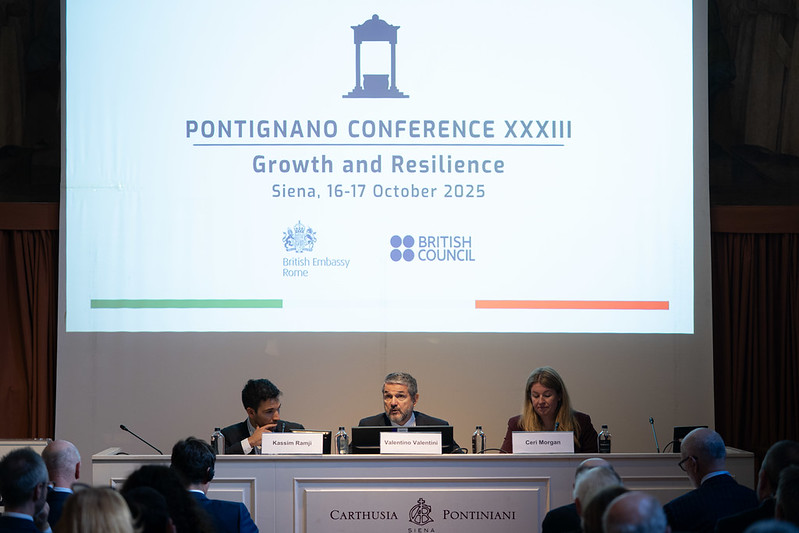
This year’s Pontignano Conference is the 34 th edition. We are holding it at Villa Wolkonsky, His Majesty’s Ambassador’s Residence in Rome, on the 26 and 27 November 2026.
The UK-Italy relationship has continued to strengthen in the last 12 months, from the UK Carrier Strike Group’s deployment to Naples in 2025 to four Royal visits including as part of the Milano Cortina Winter Games 2026, alongside a steady stream of Ministerial engagement. Our economic partnership continues to thrive, building on a strong and resilient trading relationship, with Italy as the UK’s ninth-largest trading partner, whilst our security and defence collaboration remains the strongest in many years, underpinned by the Global Combat Air Programme. Our cooperation is deepening across sectors including advanced manufacturing, science and technology, life sciences, financial services and clean energy, supporting the prosperity that underpins our wider strategic partnership.


To reflect both of our countries’ priorities and the global challenges we face, our theme this year centres around growth, security and values. We will look at how we can work in partnership to both support prosperity and protect our national interests, whilst drawing on our deep cultural ties to strengthen our shared values including liberal democracy, rule-of-law and equality of opportunity. In recognition of the UK Government’s focus on devolution and Italy’s longstanding tradition of regional governance, the programme will include a plenary discussion on regional leadership and opportunities for economic growth.
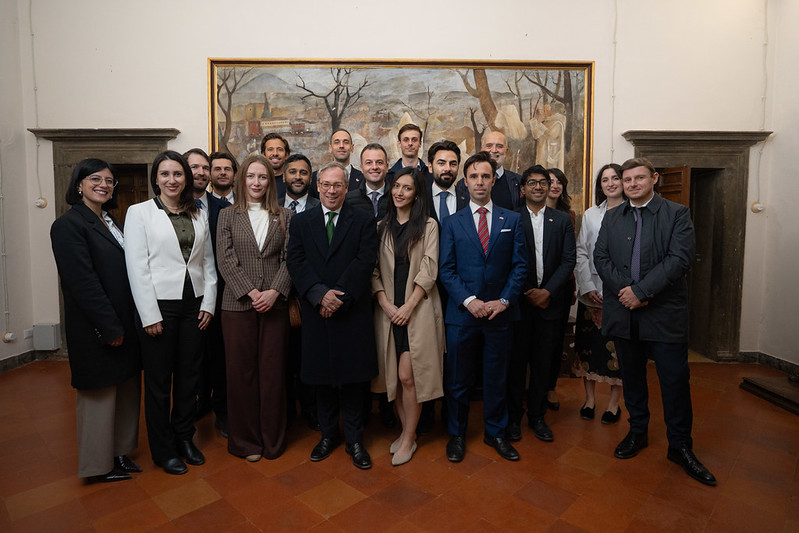
In the third year of our UK-Italy Young Leaders Programme we are delighted to incorporate formally the newly formed Young Leaders Alumni Network into the Conference this year, bringing new and diverse voices to the discussions.
Our programme will run from Thursday afternoon to Friday evening, with a mix of keynote speeches, plenary panel discussions and breakout sessions. This year, we will experiment with a different programme structure, including six workshops and smaller discussion groups (rather than four), but with an understanding that not every delegate may want or be able to attend every session. These breakout sessions will focus on:
Security and Defence in an Era of Geopolitical Turbulence: In an era where security challenges are increasing internationally, and misinformation and other hybrid threats are presenting challenges domestically, there is growing pressure for increased expenditure to mitigate these risks. How should democratic governments ensure national security while maintaining public support? Building from this, the discussion will consider the role of defence in the economy, and the wider impact of disinformation on national security, including in terms of election interference, the defence of liberal democracies and public perceptions of government.
Opening Pathways to Work for Young People: Building on British Council Italy’s research following Pontignano 2025 on barriers to careers in the creative industries, this session will broaden the discussion to look at the wider challenges young people face entering the labour market. It will explore common issues around entry routes, skills pathways and regional inequalities, and consider how far education systems are equipping young people for work. It will also explore the role that international mobility and collaboration – including Erasmus+ and transnational education – can play in strengthening skills and improving access to opportunity.
The Next Generation of Energy Security: The interconnection between the energy transition, energy security, and economic growth remains a shared priority for the UK and Italy. Against the backdrop of Italy’s advancing civil nuclear agenda – and our shared interest in the development of Small Modular Reactors (SMRs) – this workshop will explore opportunities to strengthen long-term bilateral cooperation across policy, industry, and research. As part of the British Embassy in Rome’s Clean Energy dialogue series, the session will convene government, industry, and academic experts to exchange perspectives on the role of civil nuclear in delivering secure, low carbon energy systems. It will focus on addressing regulatory and industrial challenges, identifying practical next steps to deepen bilateral collaboration, and explore the role of nuclear energy for our shared future energy security.
Critical Minerals – Policy, Partnerships and Innovation: With the strengthened focus in both the UK and Italy on critical minerals, this is a timely moment to exchange perspectives on policy, strengthen working-level coordination, and identify practical avenues for collaboration. The workshop will cover the big issues facing critical minerals policy-making today: multilateral coordination, third-country partnerships, finance and market development, trade policy, circularity and responsible supply chains, and technical innovation. Through the workshop we will define priority areas for future cooperation, advancing shared objectives on resilience, transparency and sustainability in critical minerals supply chains.
Economic Security and Openness – Navigating a New Geoeconomic Era: As geoeconomic competition intensifies, governments are taking a more active role in protecting strategic sectors, securing supply chains and reducing critical dependencies.
But This workshop will explore how the UK and Italy are responding to this challenge, examining approaches to industrial policy, investment screening, critical infrastructure and supply chain resilience. Bringing together public and private sector perspectives, the discussion will consider the practical trade-offs between openness and security, identify emerging risks and opportunities, and explore where closer UK-Italy cooperation can strengthen resilience and long-term prosperity.
Innovation, Competitiveness and Technological Sovereignty: As AI and advanced technologies become increasingly central to economic growth, national security and public service delivery, governments are placing greater emphasis on technology sovereignty: ensuring access to, control over and resilience in critical technologies while maintaining trusted international partnerships. This workshop will explore how the UK and Italy can strengthen competitiveness, resilience and innovation in strategically important sectors, in a world of deep technological interdependence. The discussion
will explore technological sovereignty from three angles, linked to the UK-Italy Science and Technology Dialogue launched in 2025:
- strengthening strategic capabilities in life sciences to support innovation;
- balancing openness in scientific collaboration with the need to protect critical research, data and emerging technologies; and
- collaboration on AI, quantum technologies and advanced computing infrastructure to maintain competitiveness, while reducing critical dependencies.